Reviewed By: Rebecca Anderson, FNP-BC
Spring is a time for growth, both in nature and in your personal well-being. As flowers bloom and the weather gets warmer, many people also embark on growth-oriented journeys. Spring is a great time to start new healthy habits and focus on bettering yourself. In today’s blog post, we’ll cover how you can refresh your physical activity habits and incorporate gentle movement to make the most of this Spring season. Keep reading to learn more!
Why Spring Is the Perfect Time to Refresh Your Movement Routine
It’s important for seniors to exercise regularly to keep their bodies and minds healthy. Research has shown numerous benefits of regular physical activity for older adults, including improved sleep quality, less anxiety, and reduced blood pressure [1]. Likewise, mobility and strength increase seniors’ sense of independence as they age, allowing them to complete daily activities without struggle [2]. Spring is a great time to start a new exercise routine, as seniors can get physical activity outdoors while enjoying the warm weather. Winter’s cold weather makes it difficult and unsafe to exercise outdoors for most individuals, leading to physical inactivity during this season. This is why many seniors feel more motivated to exercise in the Spring, when the weather warms up, and the sun shines for longer.
Senior-Friendly Mobility Movements to Start This Spring
Gentle Stretching for Flexibility
To partake in safe movement and exercise, you first need to make sure your body is properly stretched. Stretching increases flexibility, which is necessary to prevent joints and muscles from tensing up [3]. Start with your neck and shoulders. To relieve tension in your neck, practice box breathing, head retraction (tuck your chin and move your head backwards without tilting your head up), and thoracic spine extensions (clasp your hands behind your neck while sitting in a chair and slowly bend over the back of the chair) [4]. To stretch your shoulders, roll your shoulders down and back or do a wall climb (stand facing a wall, place your hand on the wall at shoulder height, and slowly start walking your fingers upwards, stopping when you feel mild tension) [5].
To stretch your hamstrings, sit on the floor with your legs straight out in front of you, then bend at the waist and reach toward your feet [6]. To stretch your calves, lean on a wall while your foot is pressed heel-to-floor and ball-of-foot to the wall [7].
To stretch your spine, raise one arm over your head while the other reaches across your body, and gently rotate your body toward the arm reaching across your body [8]. This can be done while sitting or standing.
As with any physical movement routine, it is best to consult your doctor about the best types of stretches to complete for your health issues and concerns. The stretches mentioned are just a few of the long list available for joint pain or stiffness.
Balance-Boosting Exercises
Increasing balance is extremely important for seniors, who are prone to dangerous falls [9]. There are many simple balance-boosting exercises older adults can practice. First, walking heel-to-toe by placing your right heel directly in front of your left toe and stepping forward this way can increase balance [9]. Other practices, like single-leg stands (face a wall and touch fingertips to the wall while slowly lifting each leg to a 90-degree angle) and chair-supported side steps (sit in a chair with your legs bent in front, maintaining straight posture. Place an object next to your foot, and repeatedly step that foot over the object) [10].
Low-Impact Strength Builders
Sit-to-stand exercises, which use your strength to stand from a sitting position without using your hands, can strengthen the lower body and improve balance [11]. Adding light resistance band routines to the mix can target specific muscles and make everyday activities easier [12]. For example, doing a “pull-apart” exercise with resistance bands can make it easier to carry bags of groceries, since you are strengthening your arm muscles. Wall or countertop pushups are also great options for strength building, without being overly strenuous [13].
Easy Outdoor Activities for Daily Movement
Take advantage of the beautiful weather by exercising outdoors, if you are able. Taking leisurely walks around your neighborhood, either alone or with a friend, is a great way to keep your body active without an intense routine. You can even listen to music or a podcast while walking to keep your mind occupied. However, this is also a great time for mindfulness and simply taking in your surroundings with no distractions.
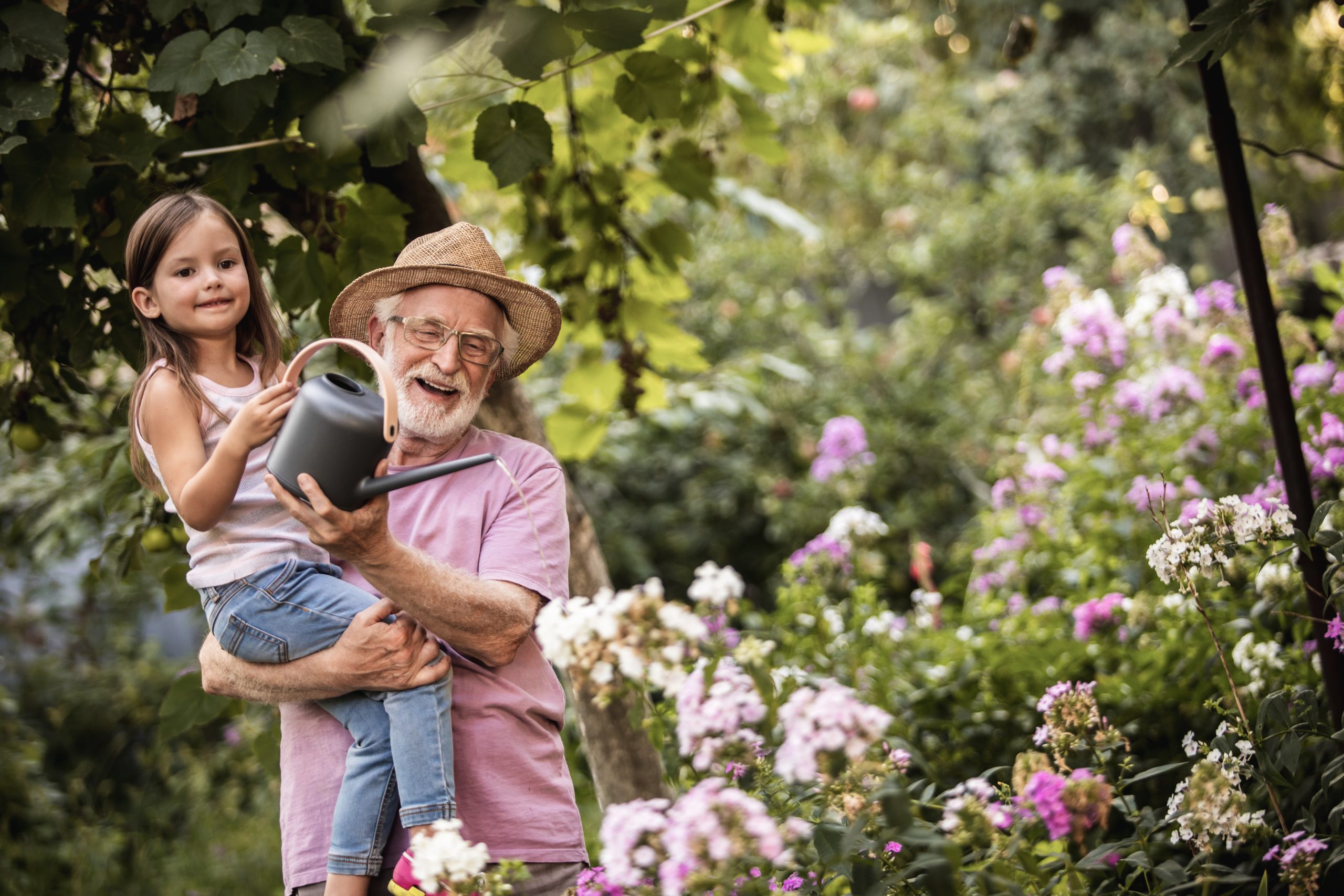
If walks aren’t your thing, you can also try gardening or light yard work, which count as functional exercise. This gives your exercise routine a sense of purpose while still working out your muscles and joints, which may help increase your motivation and enjoyment [14]. Remember to use caution when doing lawn work and gardening. Some tasks require heavy lifting, which may be too strenuous or dangerous depending on your current health status.
Tips for Exercising Safely This Spring
When exercising this spring, keep a few tips and safety precautions in mind. First, make sure you are wearing proper clothing to keep warm when exercising outside. It’s not Summer yet, so there will likely still be a cool breeze and chilly days depending where you are located. Ensure you’re warm enough by checking the temperature before stepping outside. Likewise, wearing supportive shoes helps decrease the chance of falls and injuries. Check out this list of the 12 best shoes for senior exercise to find a pair that fits your preferences. Hydration is also key to keeping your body healthy. You are likely to sweat while exercising, which can lead to dehydration if you aren’t consistently drinking water [15]. Carry a reusable water bottle with you while you exercise and set reminders to hydrate.
Above all, understanding your limits and avoiding overexertion should be your most important takeaway. Listen to your body and your doctor. If you are feeling dizzy, short of breath, uncomfortable, or in pain, stop what you are doing and consult your doctor. It is best to work with your doctor from the start to create an exercise routine that fits your needs and abilities.
When You Might Need Extra Support
There is no shame in needing extra support with your exercise routine—in fact, it is encouraged. Remember, it is normal for your body not to be able to exert the same amount of energy that it once did. This is a natural part of the aging process. Again, if you are feeling worn out or uncomfortable during/after any exercise, please speak to your doctor. They may perform a mobility assessment, which can provide insight into which types of movement are best for your health [16].
Refresh Your Health with Spring Movement
After finishing this blog post, set an intention to refresh your health this Spring by incorporating movement and exercise into your daily routine. Increasing mobility and strength can improve your health—both physical and mental—and better your quality of life. Start small and work with your doctor to create a plan that fits your health needs and lifestyle. For tips, advice, and support, contact Greater Good Health today. Happy Spring!
References:
- https://www.cdc.gov/physical-activity-basics/health-benefits/older-adults.html
- https://www.cdc.gov/physicalactivity/downloads/growing_stronger.pdf
- https://www.health.harvard.edu/staying-healthy/the-importance-of-stretching
- https://www.aarp.org/health/healthy-living/exercises-and-stretches-for-neck-pain/
- https://www.health.harvard.edu/staying-healthy/4-stretches-to-keep-your-shoulders-in-shape
- https://www.verywellfit.com/hamstring-stretches-2696359
- https://medschool.cuanschutz.edu/docs/librariesprovider65/foot-ankle/useful-links/calf-stretches-foot-ankle.pdf?sfvrsn=4a919cba_2
- https://www.rehabhero.ca/exercise/seated-rotation-amp-reach
- https://www.hopkinsmedicine.org/health/wellness-and-prevention/fall-prevention-exercises
- https://www.youtube.com/watch?v=CGe0JXjaOCA
- https://www.hingehealth.com/resources/articles/sit-to-stand/
- https://www.bhf.org.uk/informationsupport/heart-matters-magazine/activity/resistance-bands
- https://www.hingehealth.com/resources/articles/wall-push-ups/
- https://www.health.harvard.edu/exercise-and-fitness/gardening-and-yard-work-exercise-with-a-purpose
- https://www.mayoclinic.org/diseases-conditions/dehydration/symptoms-causes/syc-20354086
- https://www.nejm.org/doi/full/10.1056/NEJMvcm2009406